
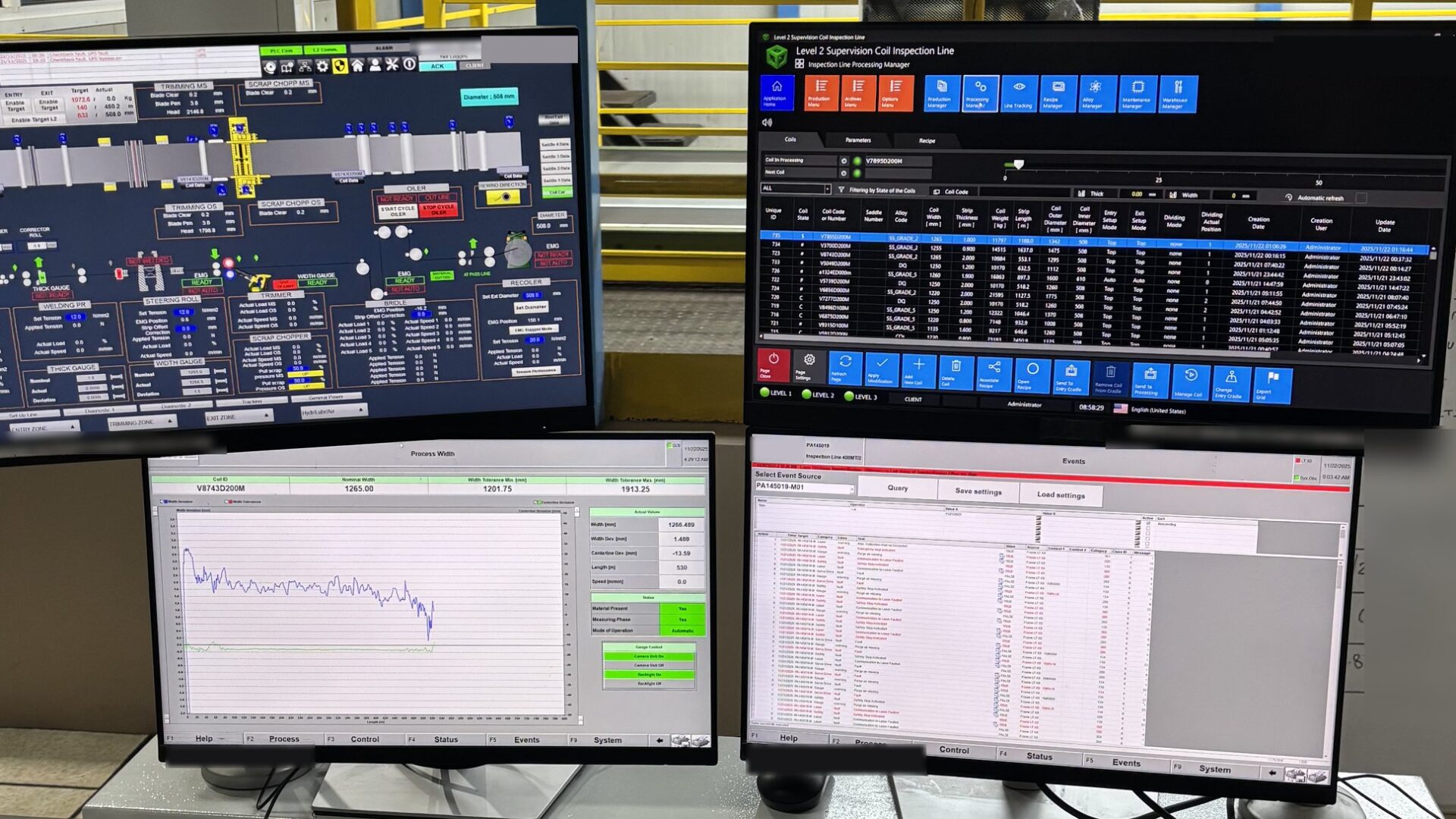
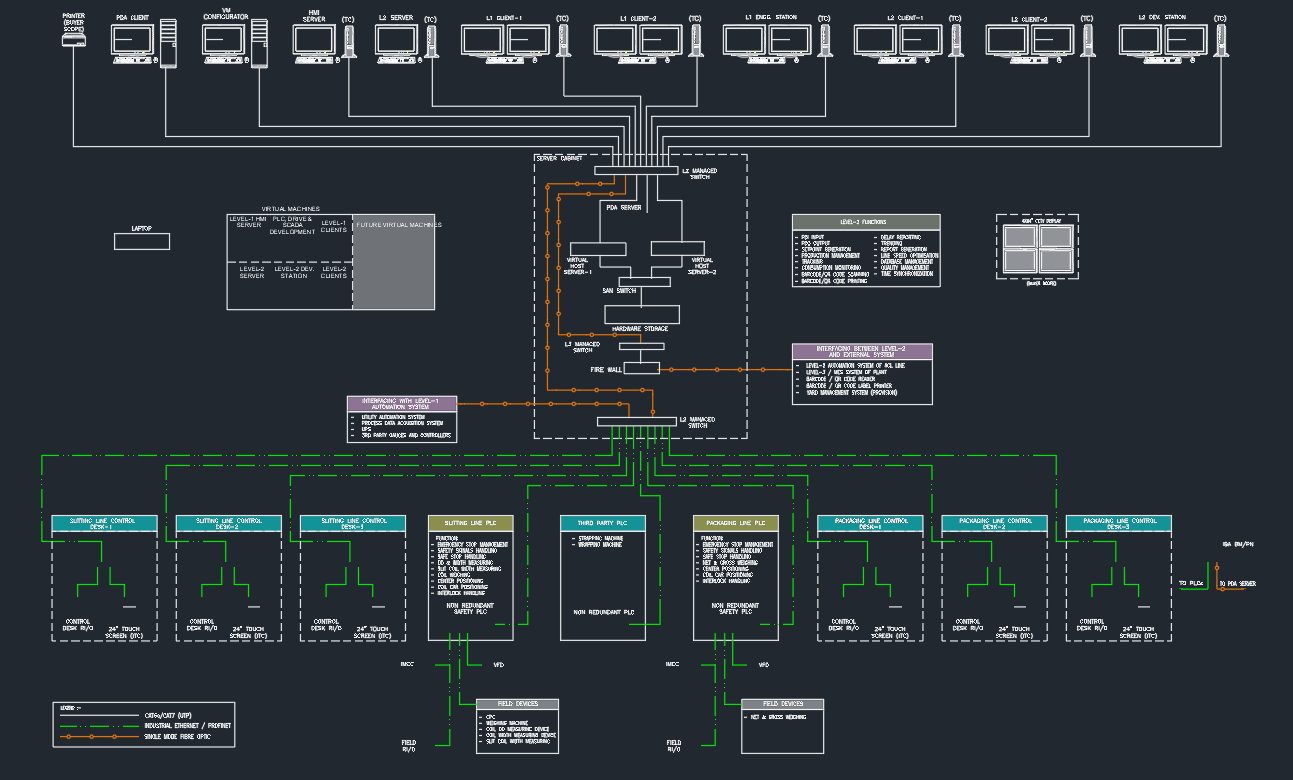
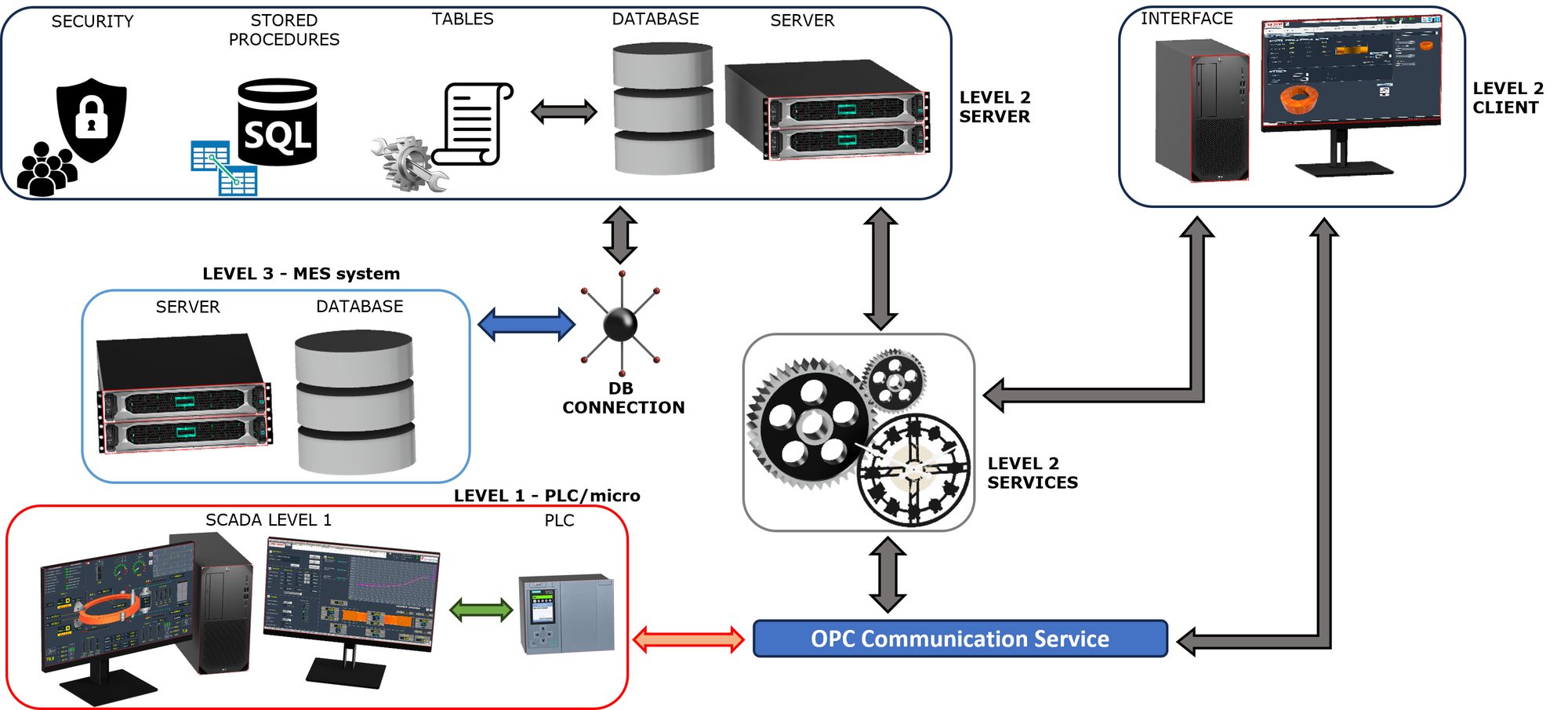
For Level 2, RBF DMAT develops a modular software platform that connects the field (PLCs, HMIs, drives) with the business systems (ERP, MES) and turns plant data into information for production, quality, maintenance and management: from a single machine to the entire plant, on new or existing installations.
It is written by the same engineers who commission the lines, using standard tools (SQL Server, .NET, OPC UA), with PLCs and ERPs of any make and in the operators’ language.
From the field to the business systems
| Level | What it includes | What it exchanges |
|---|---|---|
| Level 3 – business systems | ERP, MES, warehouse, quality | Receives production data, KPIs and traceability; sends orders, materials and recipes |
| Level 2 – RBF DMAT platform | Production, OEE, data logger, reporting, quality | Acts as a bridge between the two levels |
| Level 1 – field | PLCs, HMI / SCADA, drives, scales, printers | Receives setpoints and recipes; sends process data, events and alarms |
The modules
Each plant chooses the modules it needs and adds the others as it grows.
Level 1 supervision
SCADA for supervision and control, from the machine to the plant.
Level 2
Orders, materials, recipes, tracking, production data.
OEE
Availability, performance, quality and downtime in real time.
Data Logger
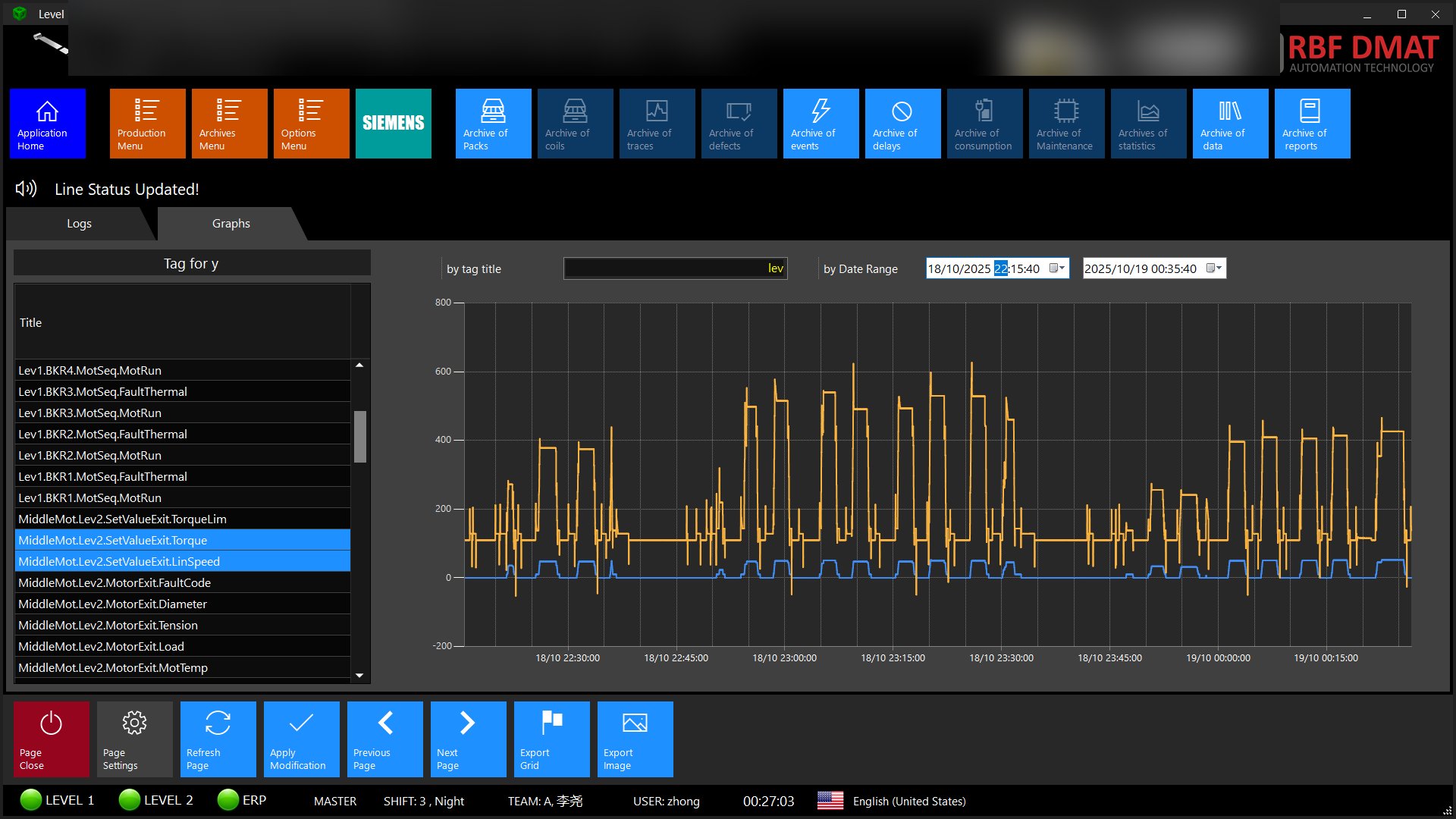
Cyclic and event-based process signals, per-product traces.
Reporting and analysis
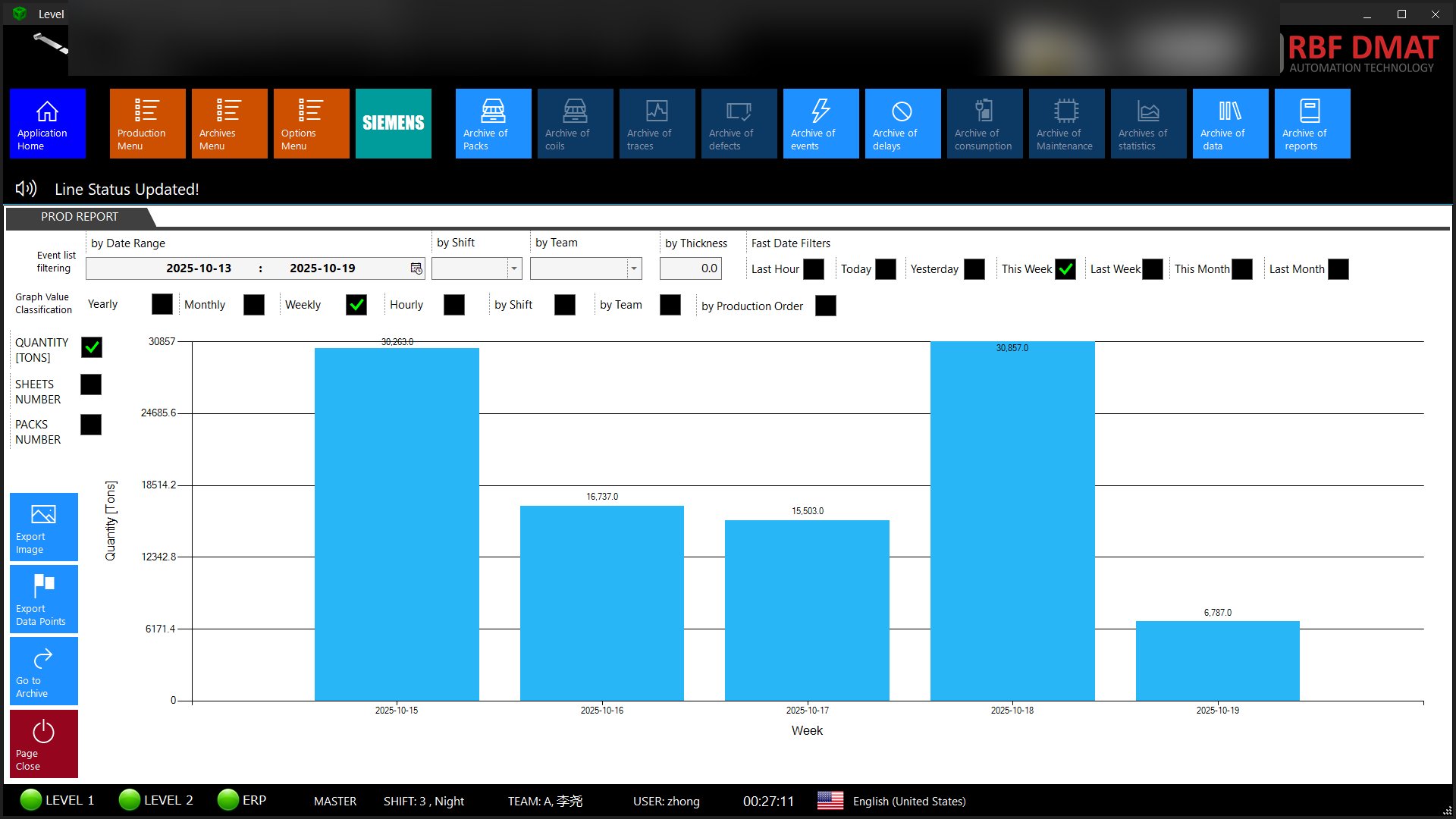
Charts, tables, reports and data export.
Connectivity
PLC, ERP and MES, OPC UA, SQL, REST, IoT and cloud.
Quality system
Defects, inspections and quality alarms.
Machine learning
Anomalies, optimisation and predictive maintenance.
Lightweight MES
Plant orders, workflows and KPIs.
Project Tracker
Staff, planning and hours by job.
Industry 4.0
Interconnection and data for the Italian Industry 4.0 incentives.
High availability
Redundant servers and databases, virtual machines.
Level 2: production management
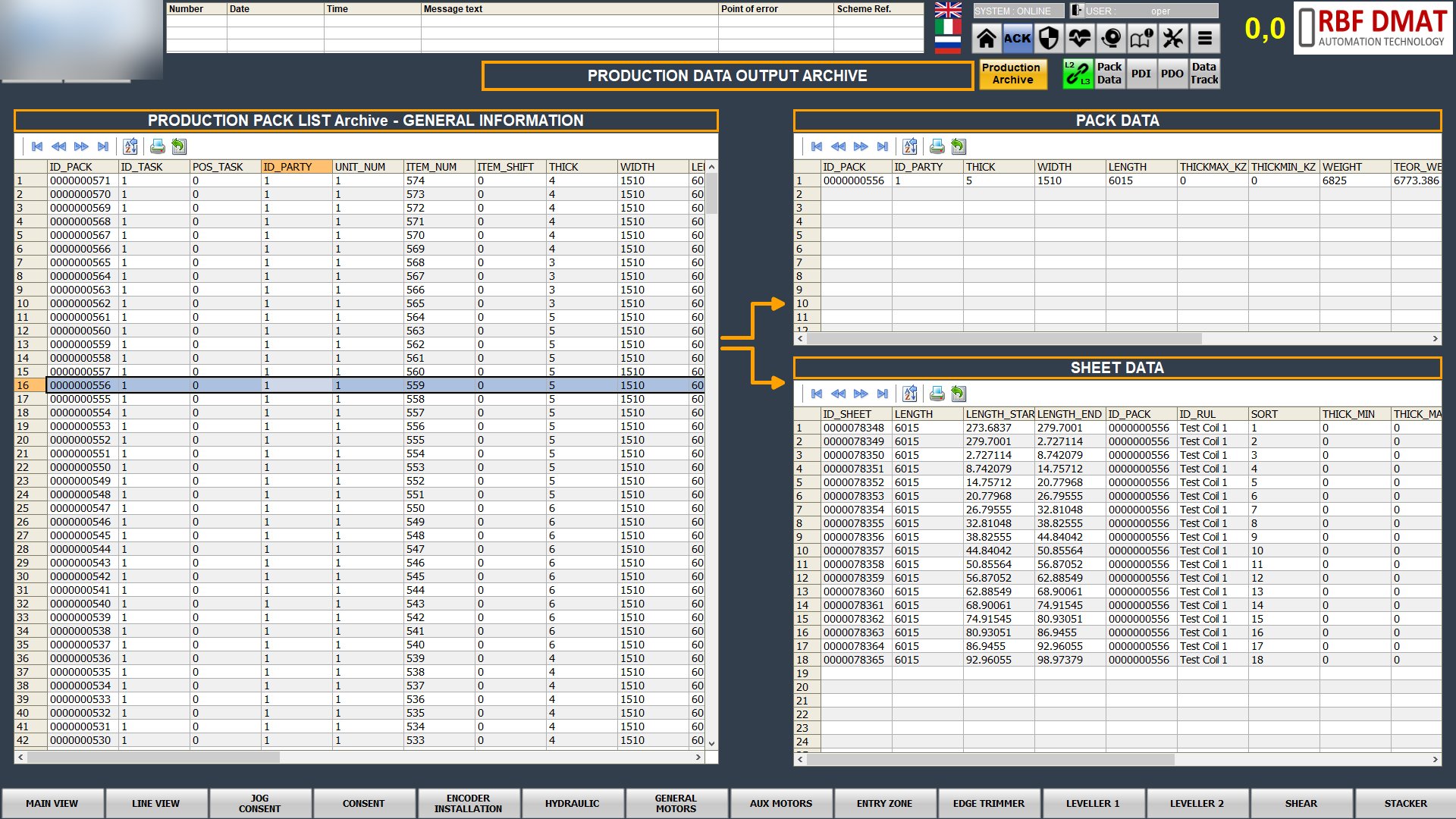
- orders from the ERP or entered manually, sequenced to the line;
- incoming materials with automatic data checking;
- recipes proposed automatically by product and material;
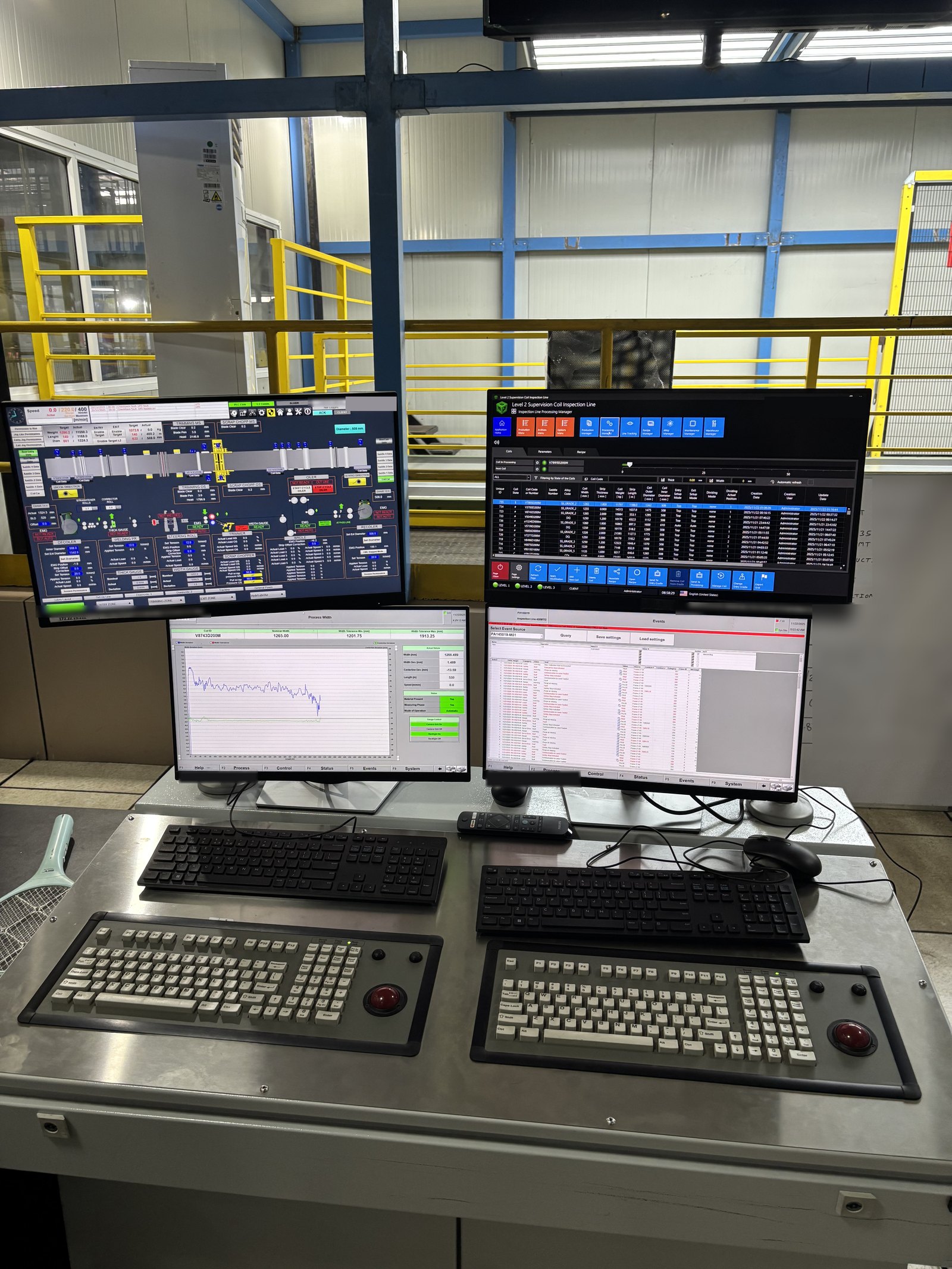
- tracking of every product along the line, in real time;
- production data linked to material, order, shift and crew;
- archives and reports with export to Excel and PDF, and feedback to the ERP of production and consumption.
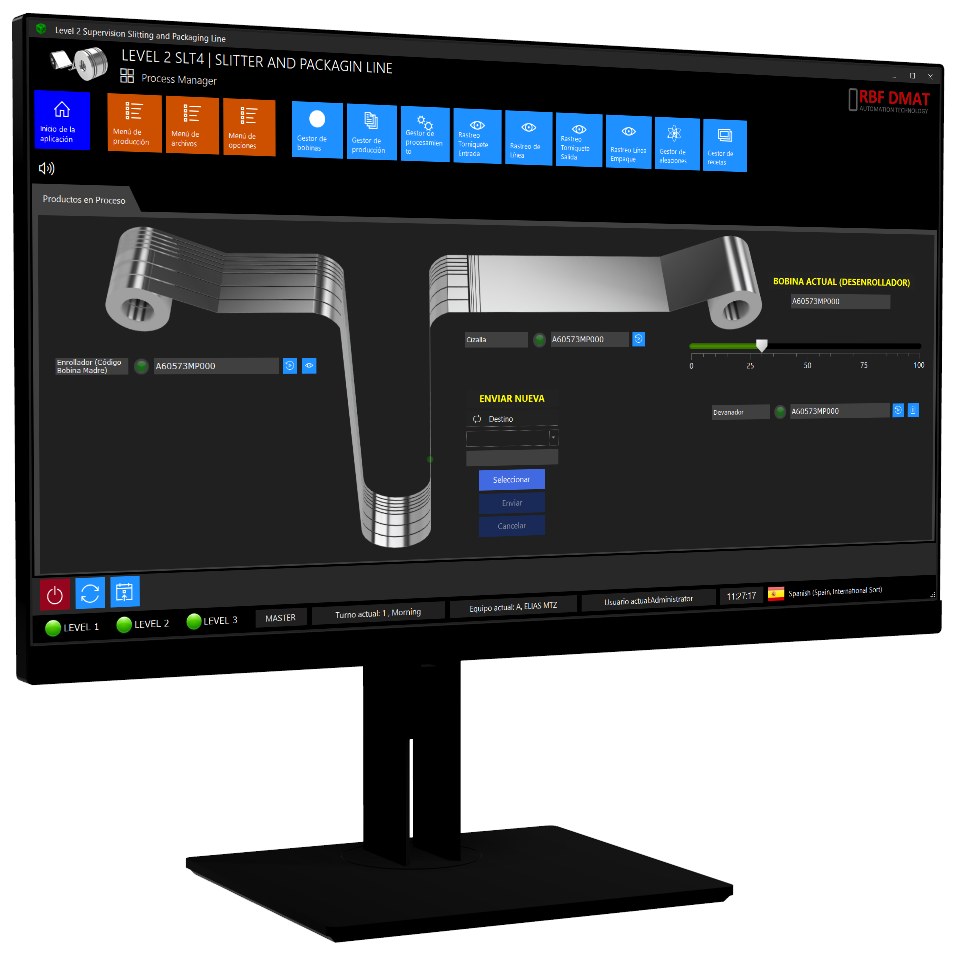
On a slitting line, for example, it checks the slitting pattern, calculates the weight and diameter of each strip, proposes the knife set-up and tracks the material through to packing, with packs and barcode labels.
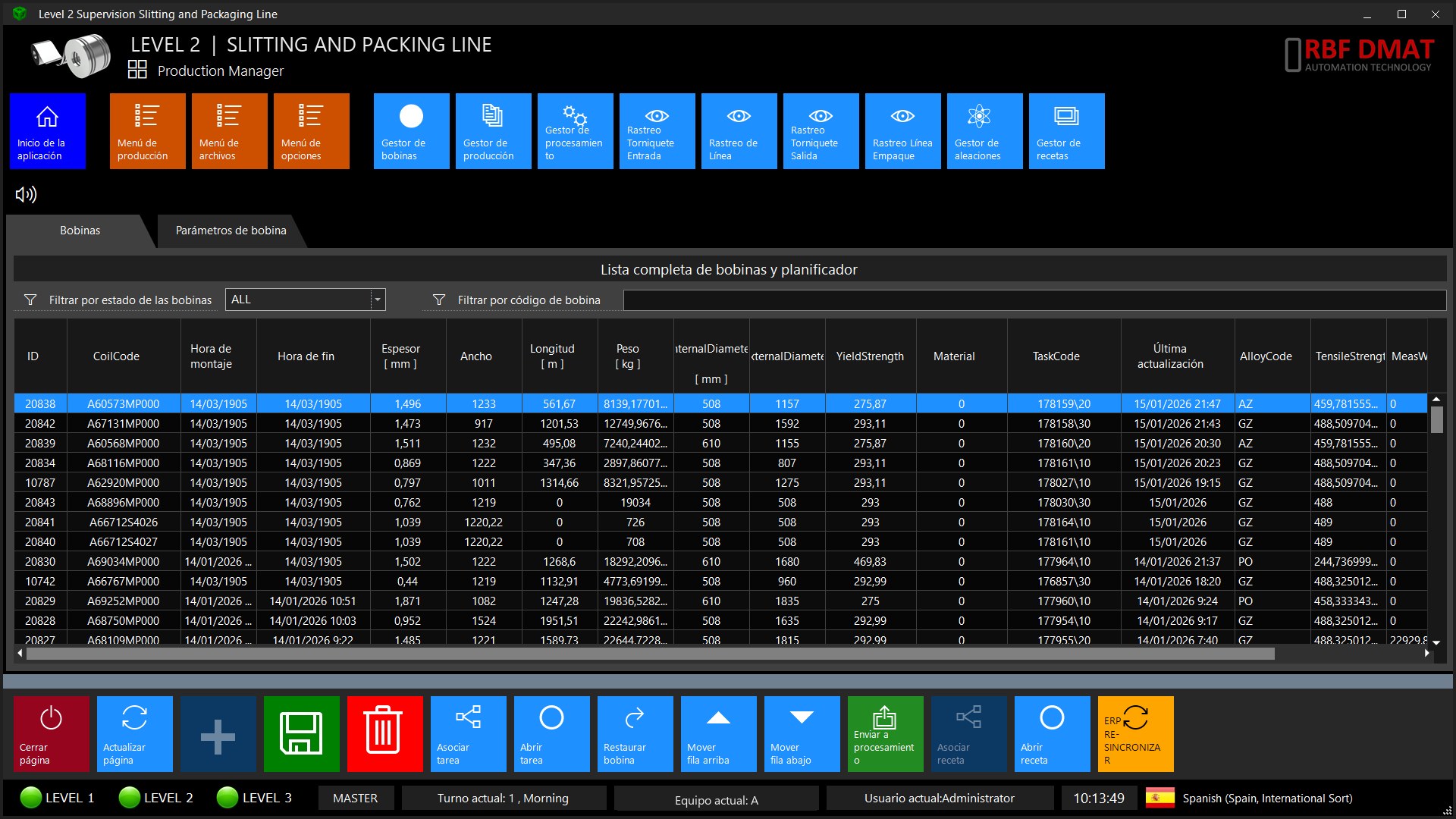
OEE: where the time goes
- real-time dashboards by line and by plant;
- line states from the PLC signals, with the cause confirmed by the operator;
- downtime Pareto, MTBF and MTTR, changeover analysis for SMED;
- comparisons by shift, crew, product and machine, end-of-shift projection;
- periodic reports, alarms and email notifications.
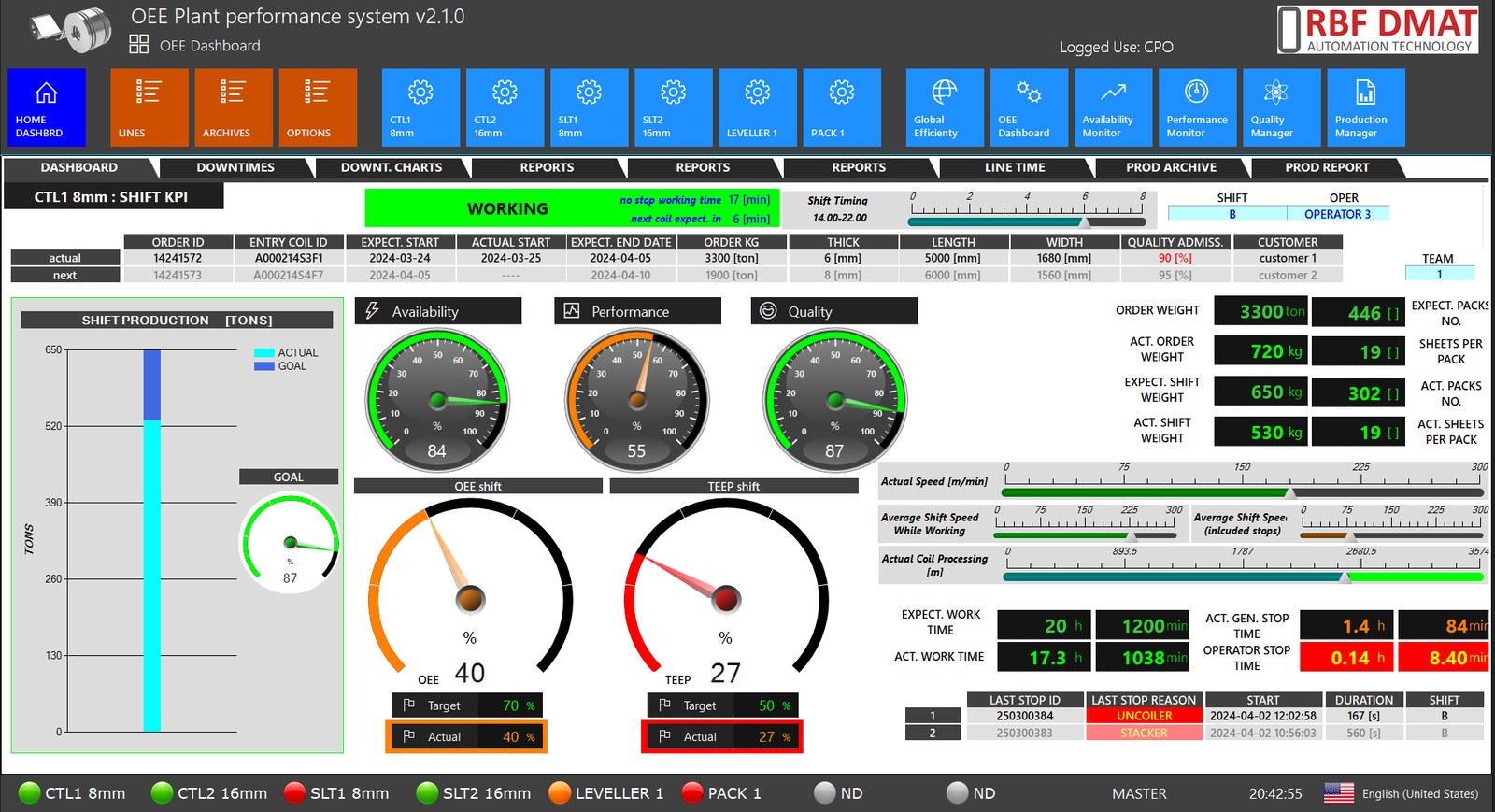
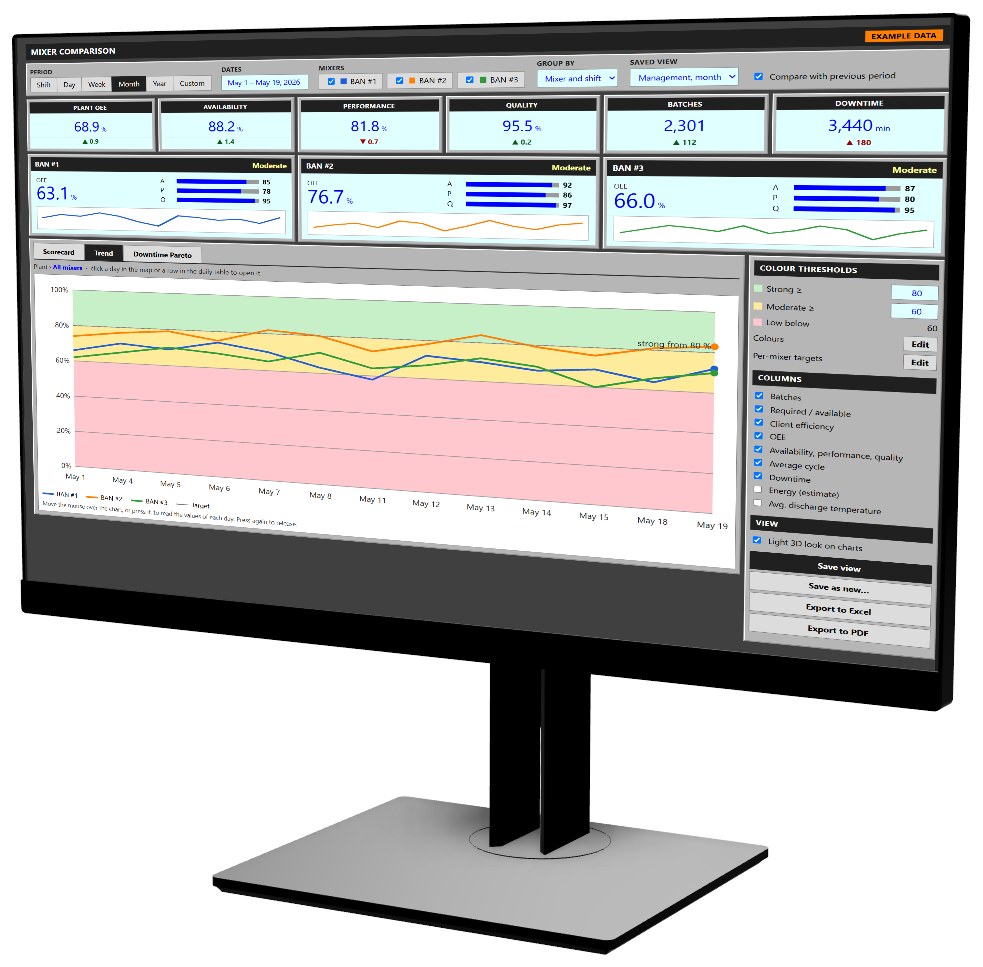 Machine comparison against thresholds (sample data).
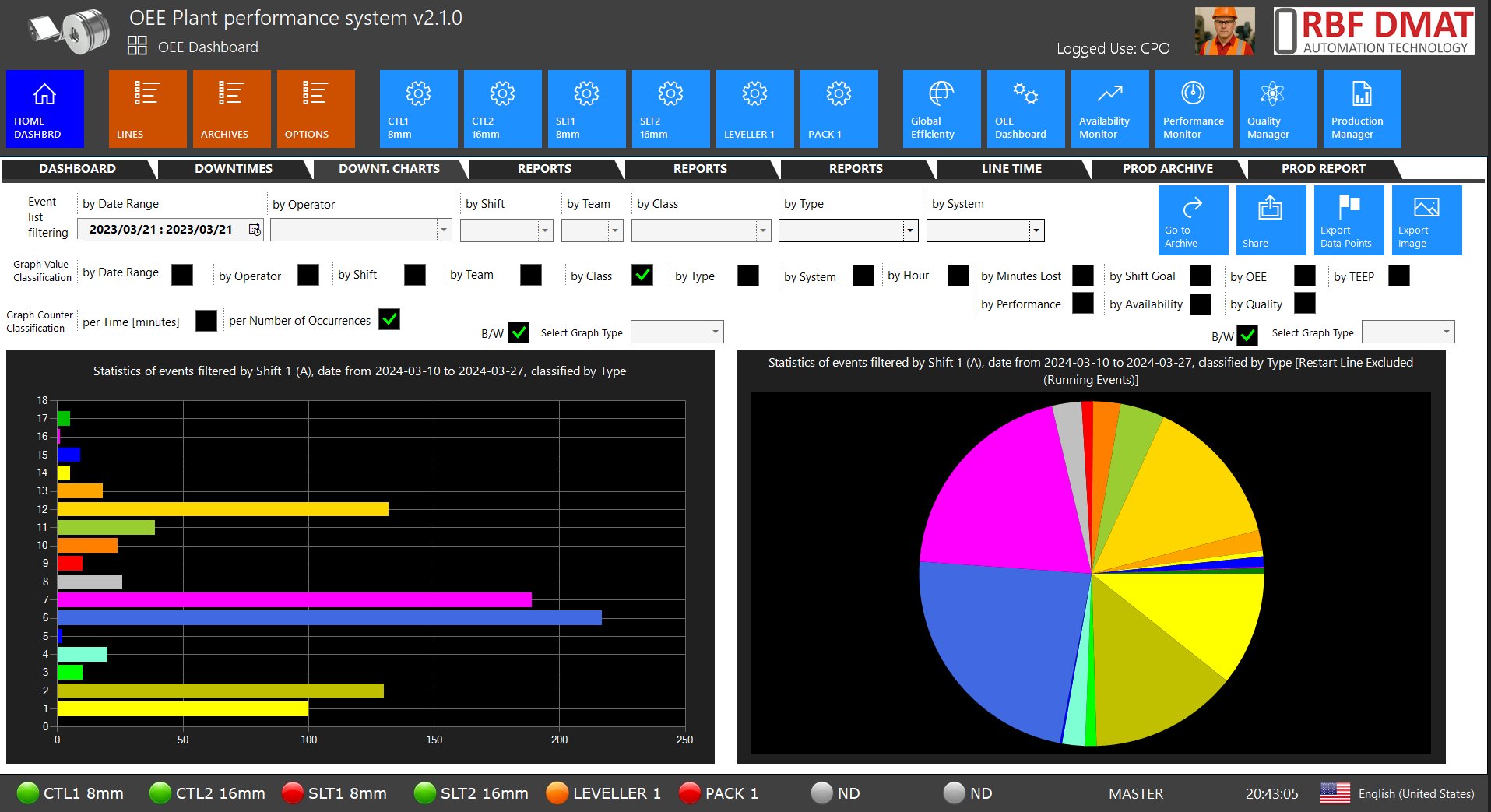
Data Logger, reporting and connectivity
- Data Logger: process signals down to 100 ms, events and alarms, per-coil traces, historical archive and energy.
- Reporting: more than 40 chart types, filters by period, shift, product and order, export to Excel, CSV and PDF.
- Connectivity: PLCs and SCADA systems of any make, ERP and MES, OPC UA, S7, Modbus TCP, SQL, REST, MQTT, cloud, scales, printers and code readers.
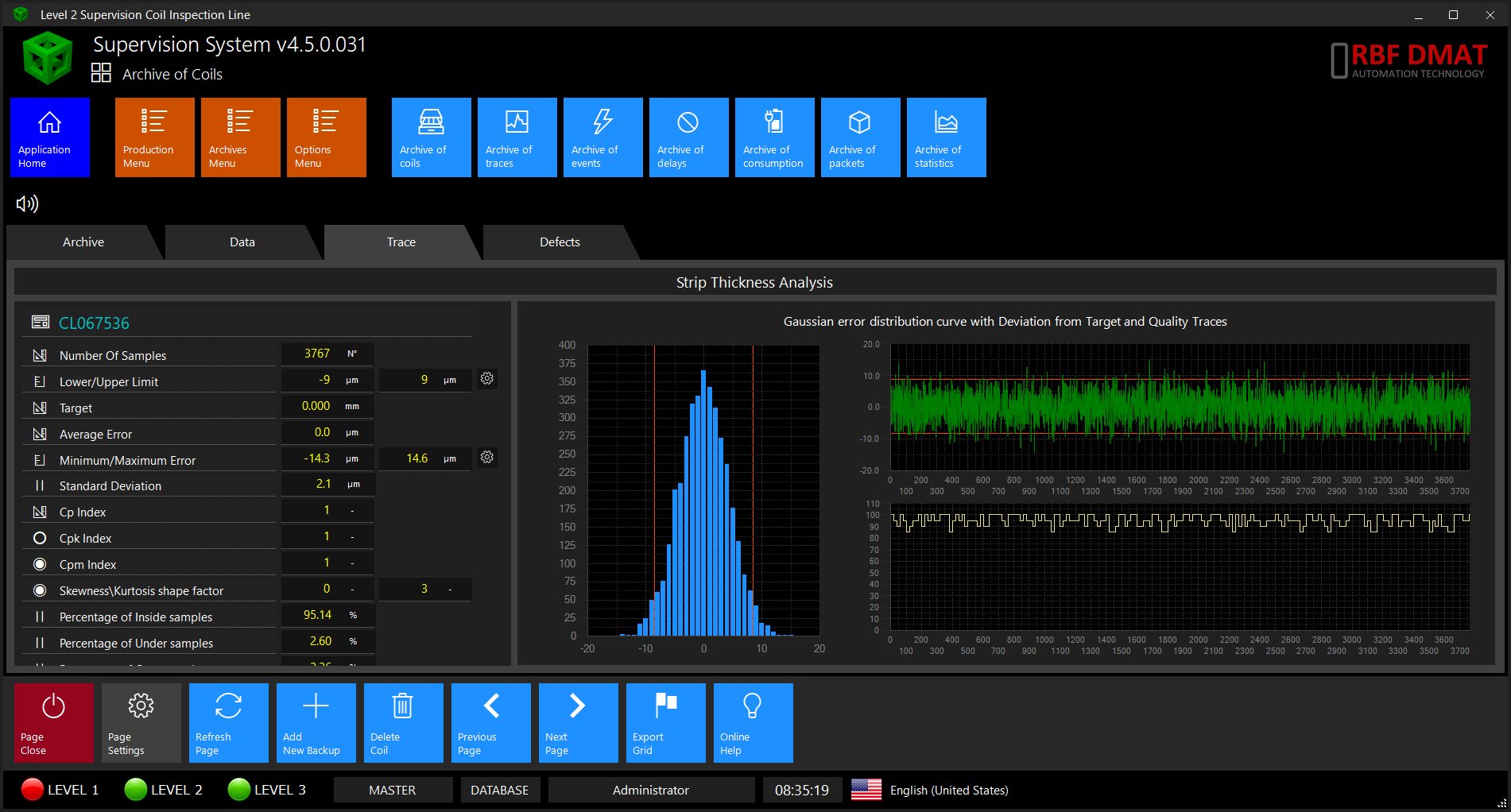
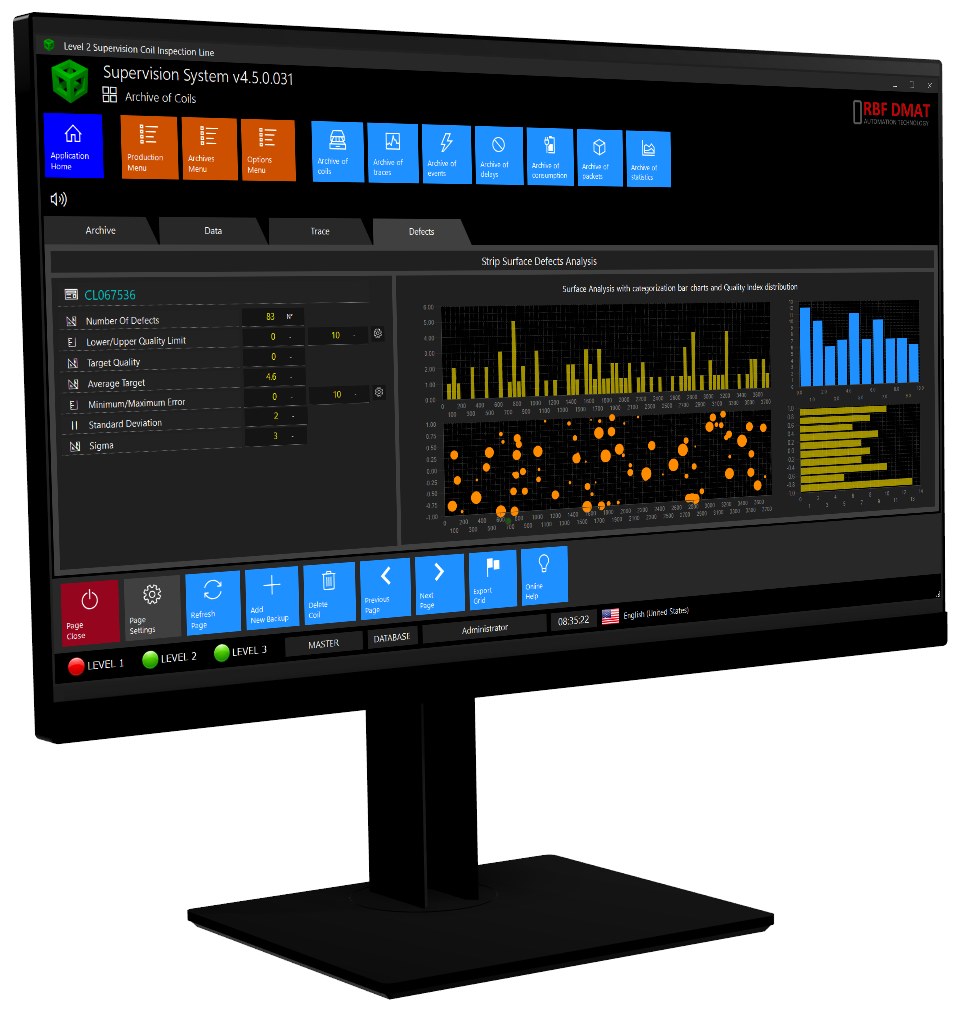 Quality system: strip surface defects, coil by coil.
Fast data acquisition and vibration
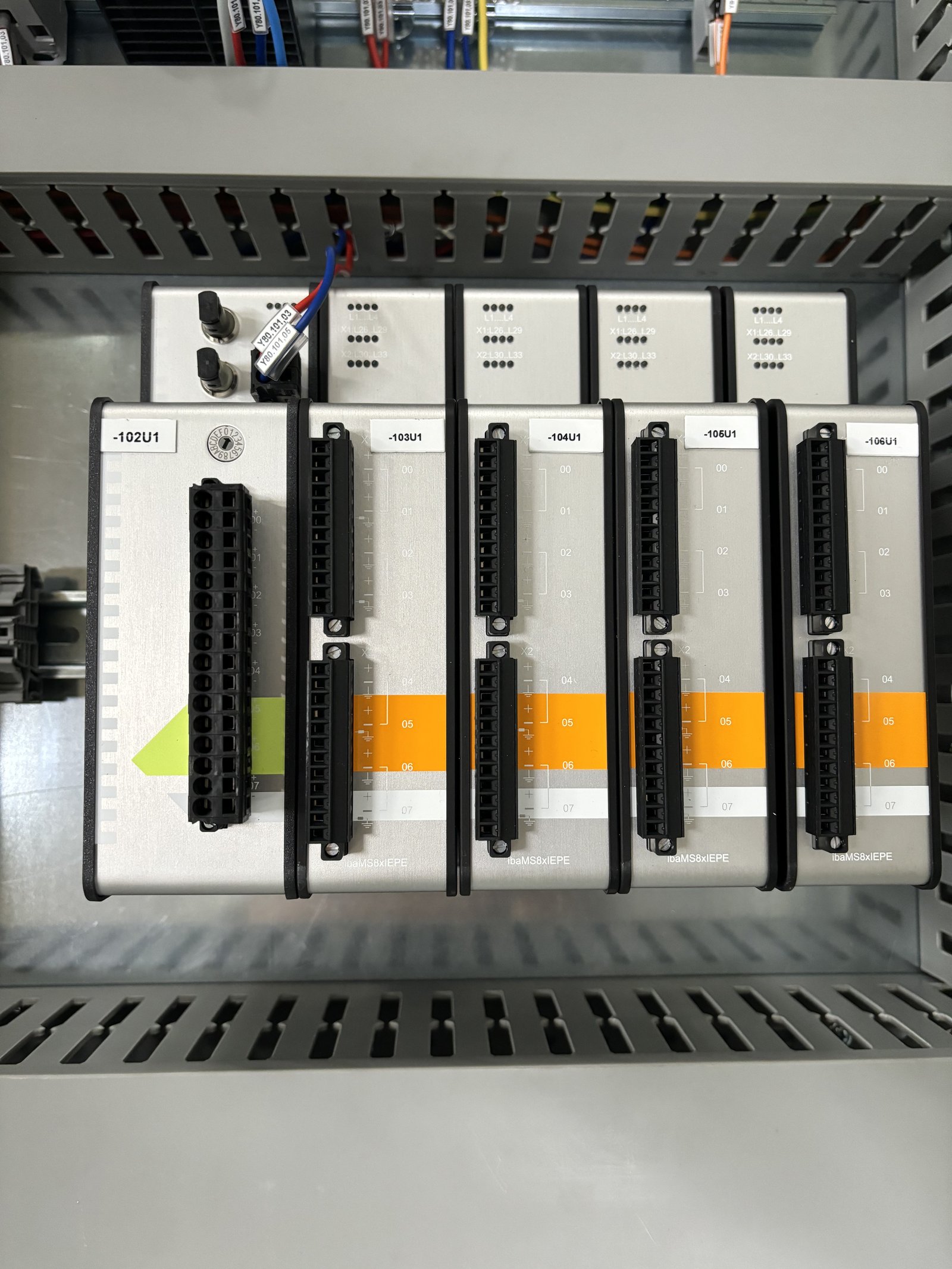
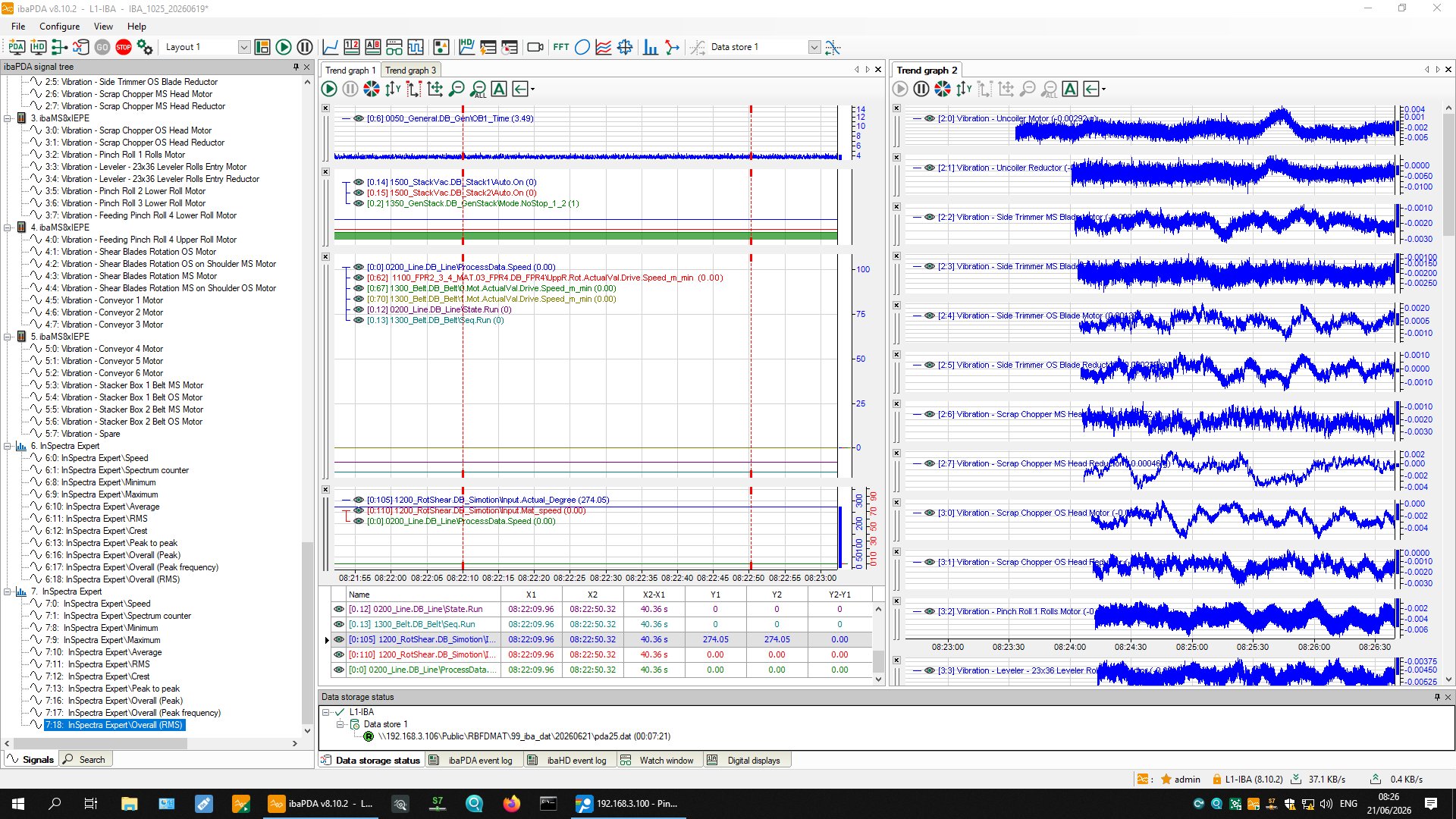
For finer analysis we integrate iba high-speed data acquisition (ibaPDA, ibaAnalyzer) and vibration sensors on bearings, gearboxes and rolls, with thresholds and alarms linked to Level 2.
Servers, racks and workstations
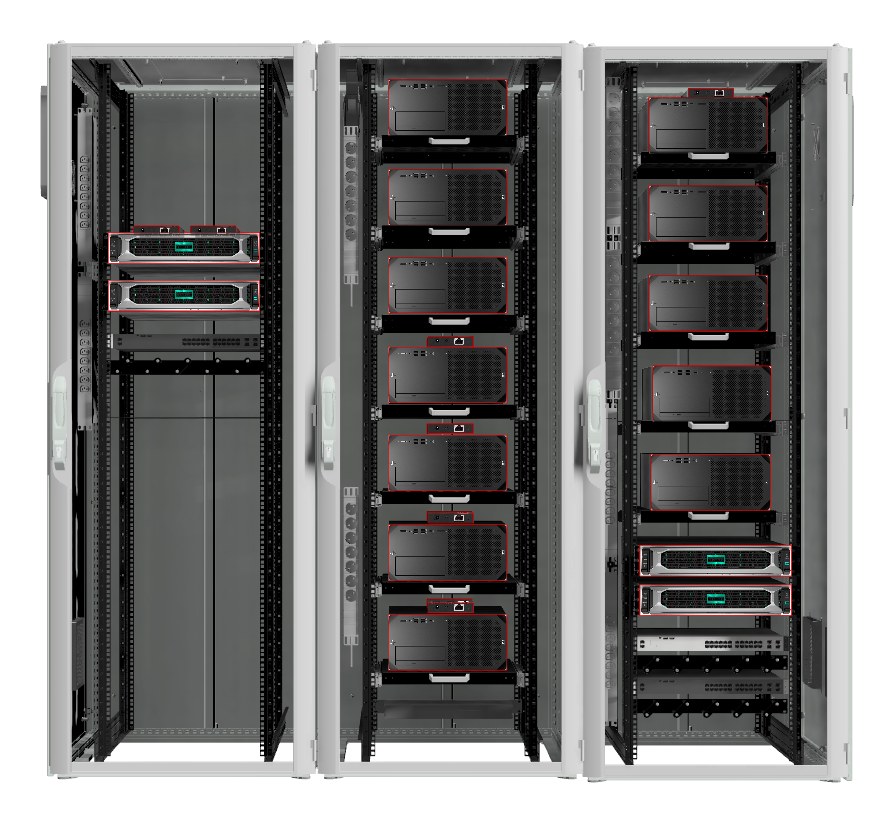
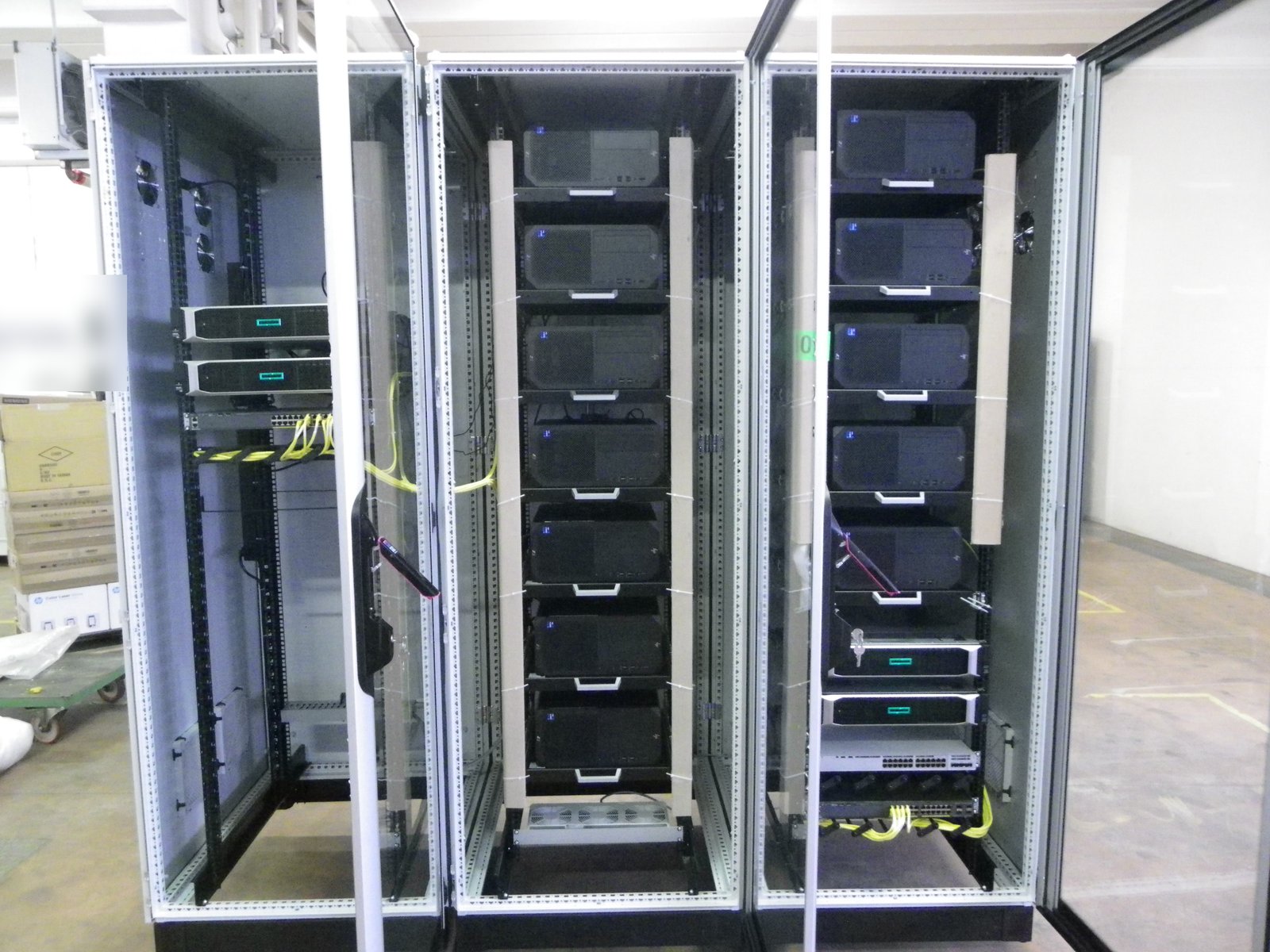
We also supply the Level 2 hardware, sized for the plant and with no vendor lock-in:
- PCs and servers from HP, Dell, Siemens with SQL databases;
- architectures from a single workstation to virtualised servers, with web clients for the offices;
- redundant high-availability (HA) systems: clustered servers and replicated databases, with automatic failover that does not stop the line;
- industrial hardware, multi-monitor workstations and remote support.
Racks and operator desks are designed in 3D and approved by the customer; assembly, wiring and testing take place in our workshop, together with the customer, before shipment.
Predictive maintenance of drives
IGBT power modules wear out with every load cycle. Our module measures their wear while the plant is running and tells you when to intervene, before the failure occurs.
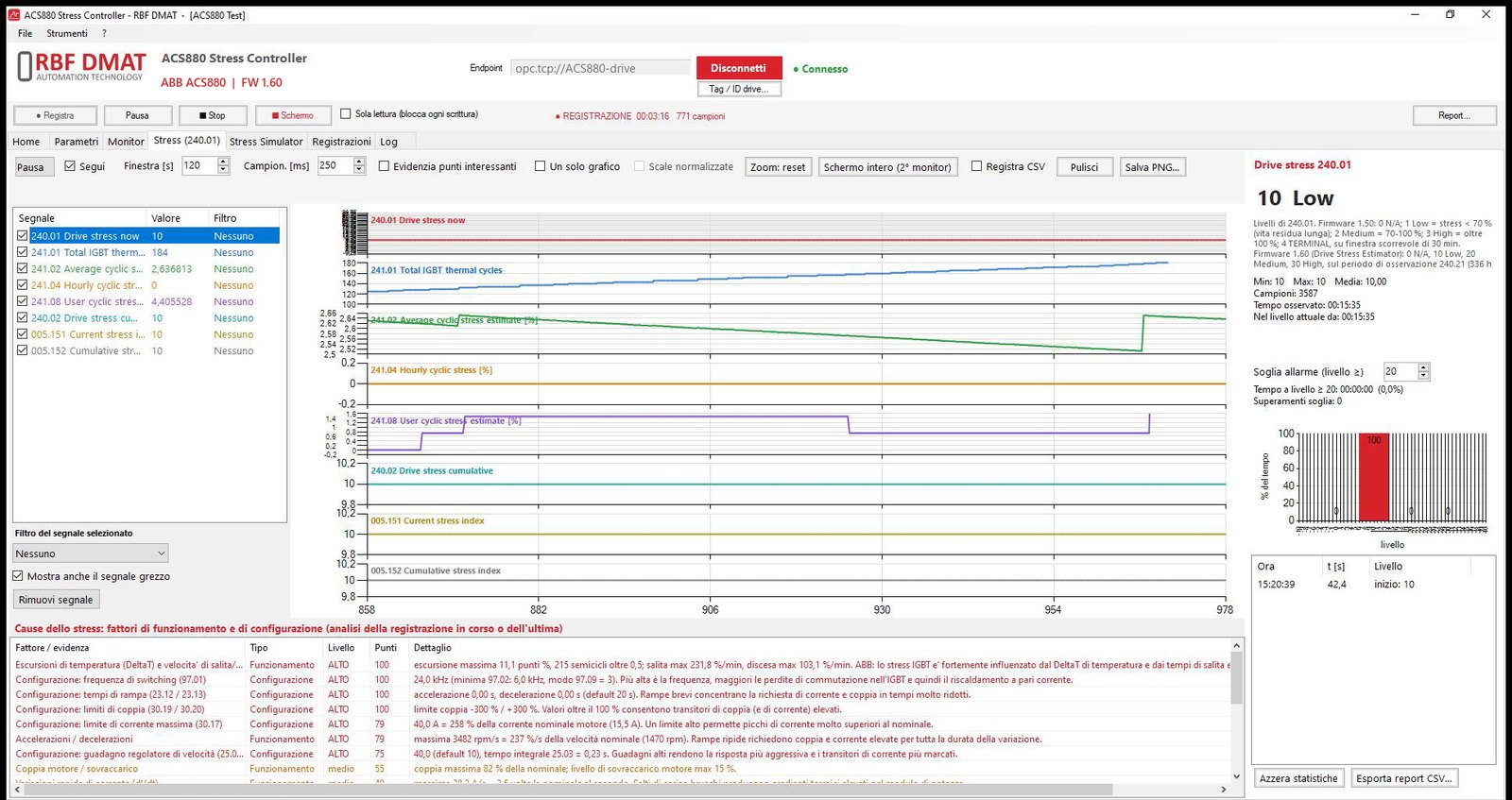
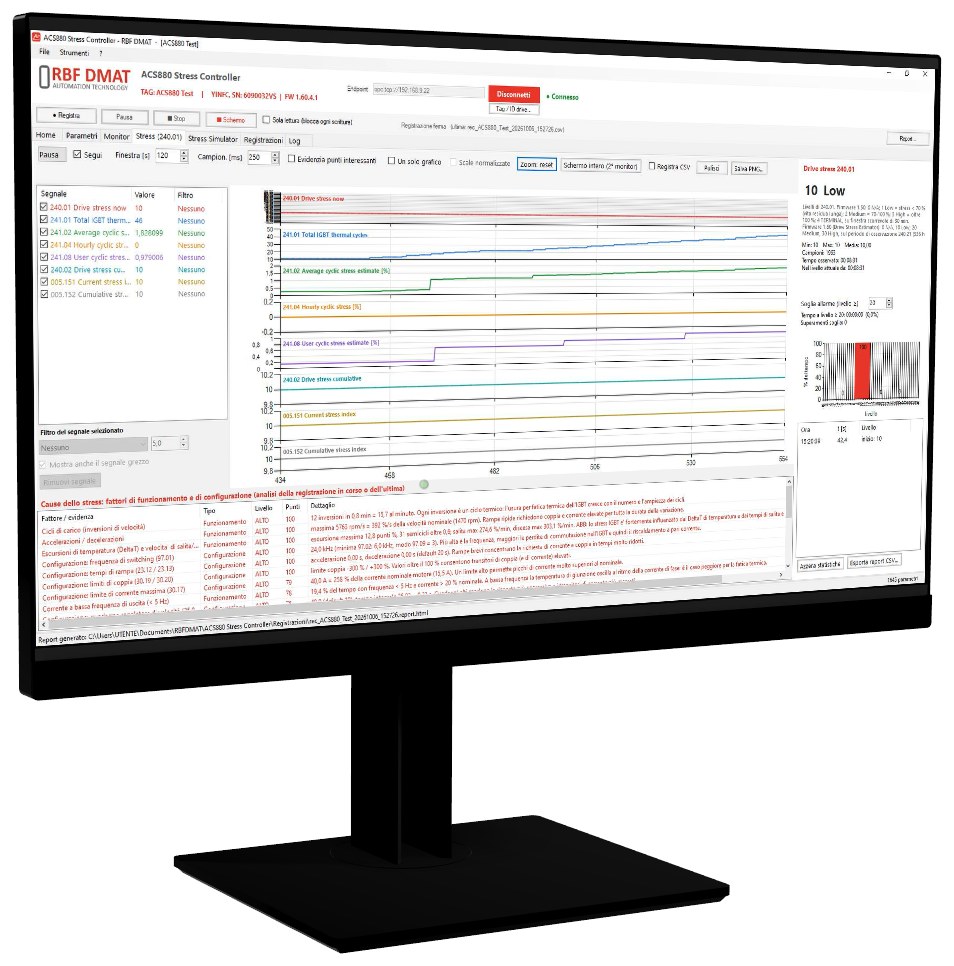 Drive and IGBT stress on an ABB ACS880 (RBF DMAT test bench).
- What it measures: drive stress, IGBT thermal cycles and alarm threshold violations.
- Why it wears: the causes in order of importance (temperature, switching, ramps, torque limits, controller), so they can be corrected rather than just replacing the component.
- How it works: read-only via OPC UA, alarms and reports in the Level 2 dashboards, validated on the bench with a simulator of our own.
It starts in the rubber mixing rooms, where the short cycles of Banbury mixers wear out IGBTs faster, and extends to extruders, calenders and processing lines. Contact us to assess it on your plant.